

- Gymna ShockMaster acoustic-wave equipment
- Suitability assessment before treatment
- Review of tendon & fascia complaints
Shockwave Therapy for Selected Conditions
Killarney Vale Podiatry discusses shockwave therapy on the Central Coast as one possible treatment option for selected musculoskeletal complaints. The clinic uses a Gymna ShockMaster device to deliver acoustic waves to a selected treatment area. It also mentions plantar fascia and tendon-related complaints. Whether shockwave therapy is suitable depends on the diagnosis, medical history and available evidence for the particular condition.
We first review your symptoms and previous treatment before deciding whether shockwave therapy warrants consideration. For an assessment of heel discomfort, see our foot pain service. Call (02) 4332 4180 to enquire about a consultation.
If you are considering this treatment after other appointments, bring any relevant reports or previous recommendations. We can look at the diagnosis first and explain whether a shockwave discussion makes sense for your circumstances.
What to Discuss Before Treatment
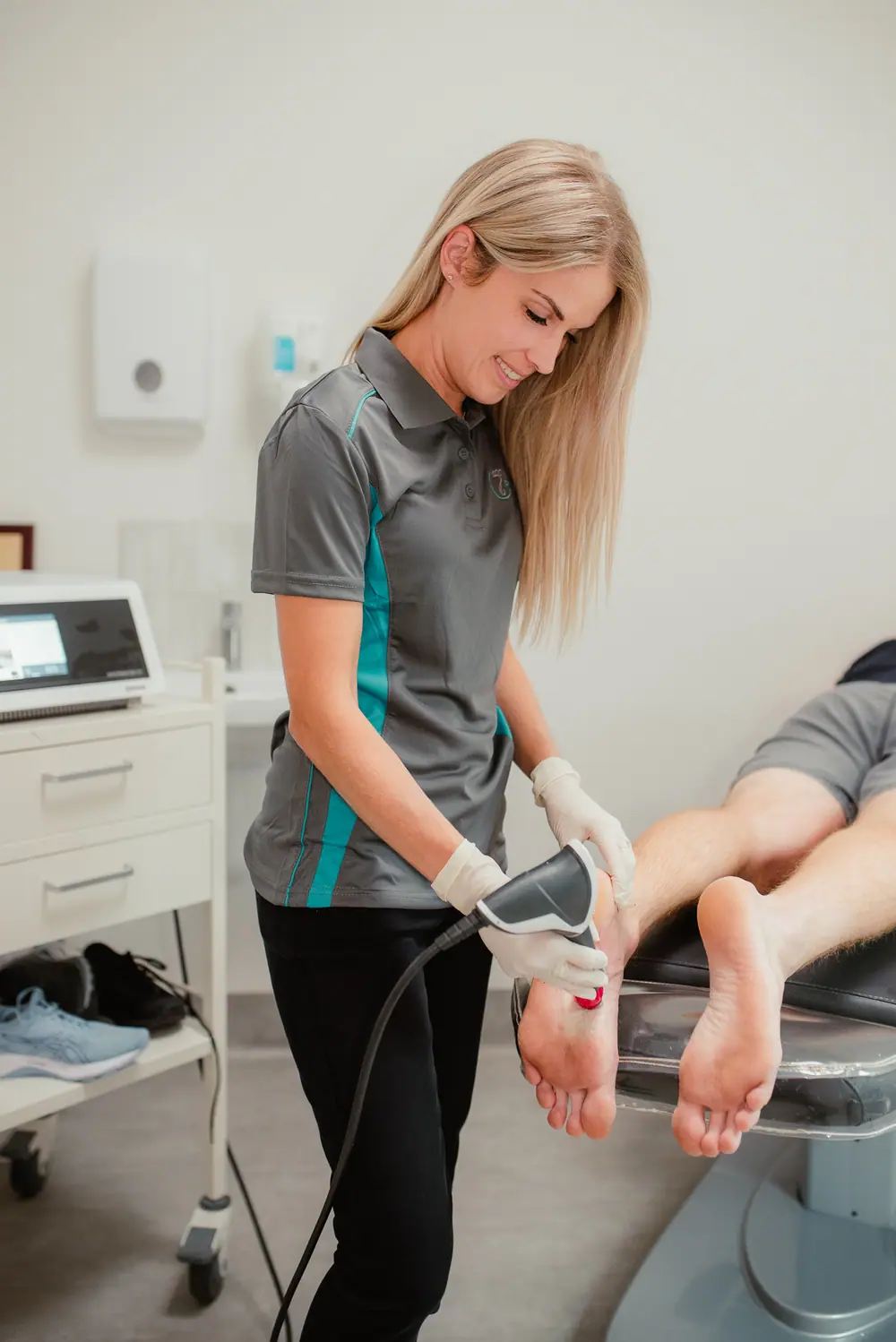
Shockwave therapy is not a substitute for establishing the cause of a symptom. A consultation should consider the condition and alternatives.
- Diagnosis: The podiatrist reviews the symptoms and relevant examination findings. Further assessment may be needed before any treatment decision.
- Equipment: The Gymna ShockMaster is the acoustic-wave device described by the clinic. Your podiatrist can explain how a proposed session is planned.
- Suitability: Medical history and any relevant precautions are reviewed. Not every tendon or foot condition is suitable for shockwave therapy.
- Alternatives: The podiatrist can explain other management options or referrals. No particular response or timeframe is guaranteed.
If you have already tried another form of care, tell us what it involved and how the symptoms changed. This history helps the podiatrist understand why you are asking about shockwave therapy.

Ask Whether Shockwave Therapy Is Suitable
Book an appointmentThe Consultation & Treatment Discussion
We begin with a clinical assessment and a discussion of the problem for which shockwave therapy is being considered. The podiatrist explains the proposed use of acoustic-wave treatment, relevant precautions and available alternatives. We will also ask about previous treatments and any health information that could affect the decision to proceed. If treatment is considered appropriate, the practitioner can explain the proposed course and review arrangements. Individual responses vary and cannot be predicted from the website description.
If shockwave is proposed, the clinician can show you the equipment and explain where treatment would be applied. You can ask what a session involves, what precautions apply and how the proposed course would be reviewed. The clinic's current information names the Gymna ShockMaster, which delivers acoustic waves to the selected area. A decision to proceed follows the clinical assessment and an explanation of alternatives; it is not made from a website description alone.

Frequently Asked Questions
Shockwave therapy uses a device to deliver acoustic waves to a selected area. The clinic identifies the Gymna ShockMaster as its equipment for this treatment. During a session, a handheld applicator is placed against the area selected for treatment. The clinician should explain what the procedure involves, the proposed treatment area and any precautions before starting.
The clinic describes plantar fascia and certain tendon complaints among the conditions for which shockwave has been considered. The podiatrist needs to assess the diagnosis and precautions before proposing treatment. A name such as plantar fasciitis does not by itself establish whether shockwave is appropriate.
No. Medical history, the condition being assessed and possible contraindications need to be reviewed. The clinician can explain alternatives if shockwave is not suitable. Tell the clinician about relevant health conditions, current treatment and anything that may affect the procedure. Ask about possible discomfort, aftercare and other management options before deciding whether to proceed.